Genocide is an international crime. But since the Convention was first opened for signatures in December 1948, it has failed to prevent another from occurring, or stop one when the world sees it going on. Two examples: UN peacekeepers were on the ground in Rwanda watching the state-sanctioned killing; US President George Bush called Darfur a genocide in 2007 but the international community did not intervene.
Who has to end the genocide in Israel? Israelis. Genocides in the 20th and 21st century show that nothing else—no other country, no other international organization—short of boots on the ground can stop it. Innocents will continue to die until Israelis stop their government.
Afghanistan and Haiti are two countries whose women and children, especially, deserve refugee status.
In Afghanistan, the Taliban continues to systematically target women by restricting their movement, silencing them in public, barring them from attending secondary school or university, limiting access to healthcare. In Haiti, women and children are the victims of gang violence, including sexual violence such as rape and kidnapping, with little state protection.
Since the international community has failed to act to protect innocents in both countries, the few women and children who successfully flee ought to be welcomed to Canada, with open arms.
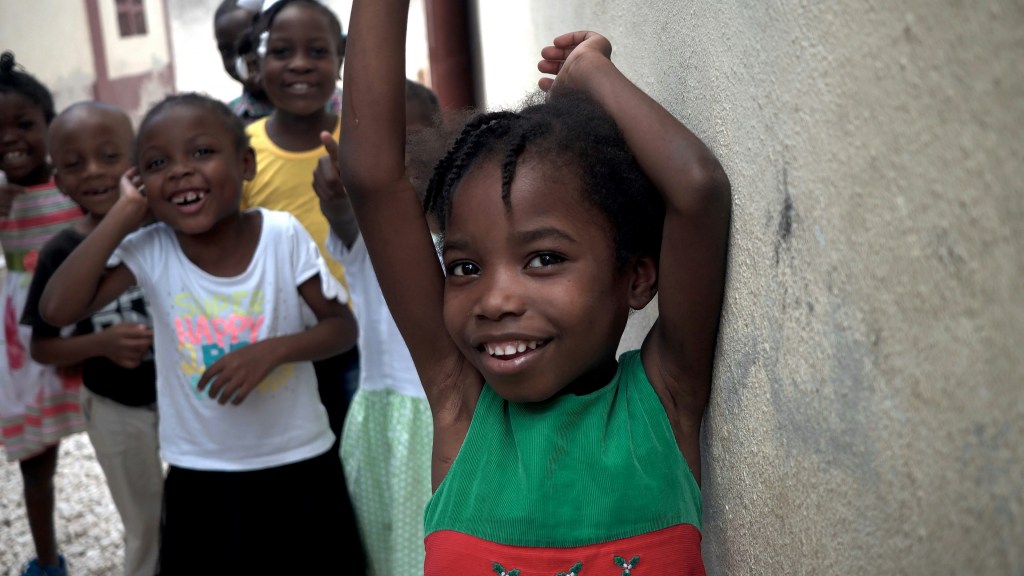
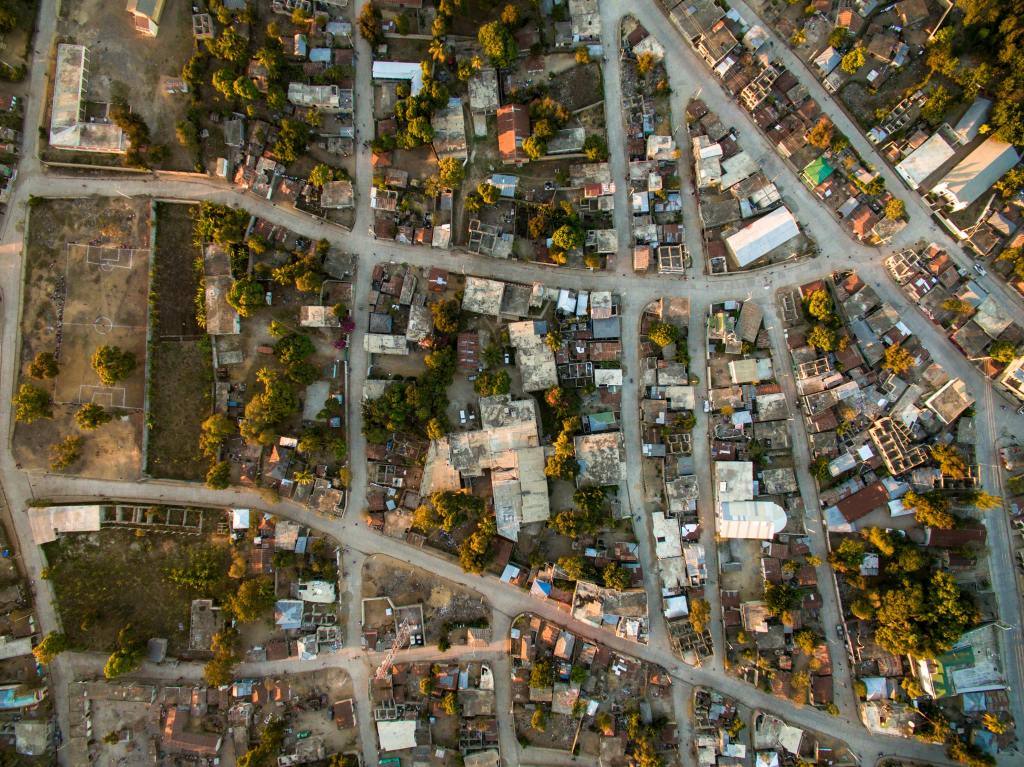
Haiti’s failure to protect women and girls: targeted by gangs
In Haiti, gang violence is brutal. Women and children are targeted with impunity. According to
Photo credit: TopShpere Media on Unspash
Amnesty International, women and children were killed, raped, and beaten by gang members last year. With other issues, such as food scarcity and disease, increasing, the humanitarian crisis shows no signs of abating.
And children are now being forcefully recruited into gangs, akin to child soldiers, and detained without cause by government authorities. International law prohibits recruiting and using children in armed conflict, so does Haitian law.
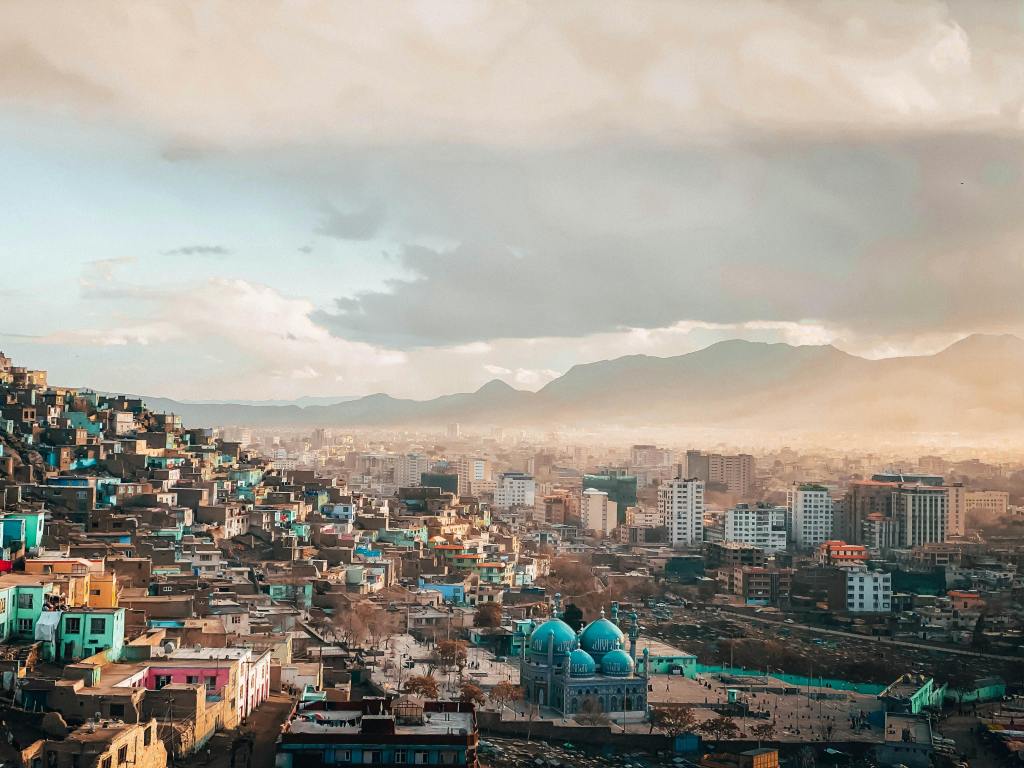
Afghanistan’s war on women: targeted by the state
Photo of Kabul, Afghanistan, by Suliman Sallehi
Afghanistan is also facing widespread hunger, which is affecting disproportionately affecting children. With girls banned from school, and families increasingly displaced, the humanitarian crisis in Afghanistan is deepening. In April 2025 alone, 280,000 Afghans were pressured to leave Pakistan and Iran. The UN and aid organizations have sounding the alarm.
The Taliban’s oftentimes deadly mistreatment of women and girls is well documented. Since re-taking power in 2021, women and girls have been increasingly persecuted. Political leaders shouldn’t need the International Criminal Court’s arrest warrants for Taliban leaders for persecuting women and girls to act.
Canada: if you want to lead…
With US President Trump’s latest immigration ban of June 4, 2025, along with removal without due process, and Canadian Prime Minister Carney’s border bill C-2, which would restrict hearings and allow for removal without due process, Canada risks mirroring US hostility toward the world’s most vulnerable.
This hostility from Canada is unwarranted. Women and children fleeing Afghanistan and Haiti are no threat to Canada. If they have relatives who can safely get them to safety, Canada should welcome them. This is what’s required of a country that claims to advance human rights and seeks to be a global leader.
So lead, Mr. Carney. Reconsider Bill C-2. It will only make it harder for the most vulnerable to seek and gain asylum, which makes the world less safe for us all.
And soon, millions of Sudanese people trying to survive in Sudan or living in a number of refugee camps on Sudan’s borders will die in large numbers.
I wish I was just being dramatic. I’m not.
I won’t repeat the numbers of Sudanese people who are at risk of starvation, at risk of cholera, at risk of death. Even though the UN continues to characterize conditions in Sudan as the worst humanitarian disaster (read: worst humanitarian response) the world has ever seen, the numbers aren’t moving people around the world to force their governments to get involved.
That’s what it will take. The UN has only received about 14% of its humanitarian budget for Sudan. Without public outcry, that number won’t change.
One reason that governments don’t care is likely that it’s an African country with a recent history of political instability. Fair enough. Sudan’s history for much of this century has shown that Sudan’s political leaders of all stripes defer to resolving political problems with violence that includes atrocities, such as rape and forced starvation.
Sudan fatigue might be a thing for those of us who can look on from far away countries and who are privileged enough to read about Sudan and think it’s just a continuation of what we’ve been seeing for years. It isn’t.
What is going on in Sudan now, today, is sinister and causing the deaths of hundreds—or more—Sudanese innocents every day. It’s sinister because it has turned into a proxy war, with states supporting either the Rapid Support Forces (RSF) or the Sudanese Army, the two main opponents.
Some of the states intervening in the Sudan conflict are mid-level states with limited regional power. They are exacerbating Sudanese political instability, and likely prolonging the conflict, by using covert intervention as a path to becoming “bigger” players in the region. In other words, they are supporting a war that they are too cowardly to fight out in the open.
Case in point, the United Arab Emirates, which is a key backer of the RSF. The UAE is likely pursuing a number of foreign policy goals should the RSF prevail: countering Turkey’s strength, going after Sudan’s minerals, or making deals at other ports. A leaked UN report stated that the UAE was making arms transfers to the RSF via Chad and Emirati passports were found on the battlefield. Yet the UAE continues to deny any involvement.
As the war starts its third year, the Sudanese in Sudan, on the run, and in refugee camps are facing neighbouring states that are beyond their capacity to significantly help. While a political solution is needed over the long term, the immediate humanitarian crisis demands our attention. The UN needs $4.2 billion: $2.1 billion has been pledged.
People are dying because Sudan is not on the radar. Help put it there.
The news coming out of Syria is a generous mix of potential positives and historical challenges. The current violence within the coastal regions is a glaring exception.
And of course, this discussion of Syria since Assad’s fall is not meant to gloss over the human suffering of the Syrian people: millions are still displaced, hungry, lack potable water, and worry about the potential of disease outbreaks.
Rebuilding Syria will take time and generous funding. What are the chances it gets them?
The positives
The butchering, marauding, corrupt, and inexplicably cruel Assad regime is finally gone. May Bashar al-Assad live a miserable life in Russia—though even that won’t even begin to match the pain and misery he inflicted on so many innocents in Syria over his twenty-four year reign of terror.
A second positive is that a Syria has a working government trying to keep the state from collapsing. The new president is Ahmed al-Sharaa. He was the military commander who led the Hayat Tahrir Al-Sham (HTS) rebel group to power. And though he is unelected, he has been leading the government since late January.
And a third—at least so far—is that the US is out of the public picture. The US still has troops (apparently numbering 2,000) in northeast Syria fighting ISIS, but US diplomats have been mostly quiet. Perhaps because they are all too busy bullying neighbours and realigning US foreign policy to please Putin (whose regime is day 1,094 into its invasion of Ukraine, with a swath of atrocities that almost make Assad look like a newborn to the dictator business). However, in a recent interview, Steve Witkoff, the US special envoy to the Middle East, did state that Sharaa had changed and I guess is doing a good job. And he expressed the hope that Syria along with Lebanon could normalize relations with Israel. What this means in the short term remains to be seen.
The challenges
The most obvious challenge is that the country’s economy is on the brink. Estimates are that the economy has shrunk by 50% since the fighting started in 2011. And the crawl out to a better economy will be hampered by ongoing economic sanctions. Although many are calling now for an end to sanctions, it likely won’t happen any time soon. European countries and the US, among others, will likely use them to force the Syrian government to do as they want (not as they do).
A second is whether social policies, particularly those affecting women, will align with Western wants. For example, a recent headline declared “Syria’s new government is already oppressing women, posing a dire threat to their future.” The article argues that HTS’s enforcement of Islamic law could mirror the Taliban’s treatment for women. Additionally, concerns remain over how Christians will be protected, though HTS has repeatedly stated it has no interest in persecuting Christians: so far, they haven’t. But fears of another Taliban could be reason enough to insist that sanctions (put on the Assad regime) remain, which may keep the breaks on an economic recovery.
Finally, the global community’s impatience. Will they give the ruling government, the same one that fought its way past the abuses of the Assad regime, enough time to set up its government, implement social, economic, and political policies, rebuild critical infrastructure, and so on? Estimates are that 16.7 million people need assistance and 7.2 million are internally displaced, meaning they have no permanent home. The economic recovery will take time. And if international lending organizations and Westerns states insist on driving the government in specific directions, and the Syrian government is moving fast or far enough, where will the technical and financial help that Syria will most assuredly need come from?
Since 2012, the Syrian people have been fighting Assad’s regime, with little help from the same countries and organizations that now want to tell Syria what to do. One estimate suggests that as many as 90 percent of Syrians are living in poverty: it’s time for less preaching and more giving.
I don’t want this blog to turn into an editorial page, where I complain continuously about Canadian politics. Or the stupidity of Americans and Canadians discussing Canada as the United States’ 51st state (as if that’s ever going to happen) or the disgusting treatment of Canada’s elected head of government, Prime Minister Justin Trudeau (not “governor” as President Trump—or should I call him something less reverent, maybe hoser?—likes to say) from Canadians who are trying way too hard to be front and centre in the politics of dickheads.
I know that my age is likely showing: I grew up in a time when we showed respect toward our political leaders. Growing up I was told, and it was reinforced in public political discourse, that I didn’t have to agree with the party in power to claim their choice for prime minister as my own. And I can’t imagine harassing a public servant on their holiday to tell them to get the fuck out of my province.
Image credit to stockpic.
So, I am incredibly frustrated with the current state of Canada’s domestic politics, and most certainly that of our neighbours to the south and other countries whose politics are edged with nastiness and whose polities have turned or are turning on the one extreme toward authoritarianism (as if that has ever really turned out well for anyone even a regime’s closest supporters) and on the other oozing toward nondemocratic tendencies.
These changes, like sending death threats to public servants, is a race to the gutter that will affect how Canadians will see the world, and how the world sees us. And how we all will see Canada’s mission and responsibility toward international peace, refugees, immigrants, and the many, many other pressing problems that will require those of us around the globe with the luxury of time and resources to think about and act on.
And I am equally pissed off because the very people who are trying so hard to break down the fabric of our democracy, and behaving so badly now, are the very ones wrapped in the warm blankets of both a democracy and a sound economy. Their democratic rights, those same ones that the public servants protect for them, are what allow them to use their free speech and free time to insult leaders who ensure that they can count on their state to help them when their lives turn sour.
For many of us in Canada, we don’t have the faintest idea what it would be like to wake up in a war zone, to watch our children die from easy accessible vaccines (and yes in countries without vaccines children die, every hour of every day), to be on the run with our children to escape torture, or to sit in a refugee camp without the protection of statehood hoping that a government will agree to let us start over. But we threaten to “throw out immigrants,” as if we all aren’t immigrants, or many of us were not once refugees. When did those of us who have benefited so greatly from a bunch of different historical factors to get ahead of most other people in the world become so ungrateful?
We are lucky. And by “we” I mean those of us who are living in countries with free speech, regular elections, diverse viewpoints, less pollution, no inter-state war or intra-state violent conflict, freedom some sustained or sporadic state conflict, working justice systems, libraries, civil rights, access to good and affordable food or food banks or public support for food, low cost for utilities and gas (need I go on). Those of us who have the time and finances to argue about this. And yet some of us are still pissing away our time refusing to take our energy and resources to try to solve problems instead of putting up empty slogans or worse refusing to stay engaged enough to be of help or even worse still reviving deadly ideologies because they have worked out oh so well historically.
But enough people are writing about the derogatory politics that has caught hold in the domestic politics of many “rich” countries. My goal for 2025 is to learn more about, to write more about, and to try to discuss, where possible, solutions on the table for the people who are facing in some cases unimaginable circumstances.
I hope to contribute to helping people around the world who are in harm’s way by raising awareness and taking action where I can.
Please leave comments and let me know what you are thinking and what you are doing.
The world needs you this morning now more than ever.
When I woke up this morning, the first thing I saw was that Donald Trump and the Republicans won the US presidential race. The second thing I saw was that a television host found it sad that Harris didn’t immediately concede once “her television network” proclaimed Trump the winner.
And so it will be. Another four years, or more, of weird and unpredictable US domestic politics and a US foreign policy that will be anyone’s guess.
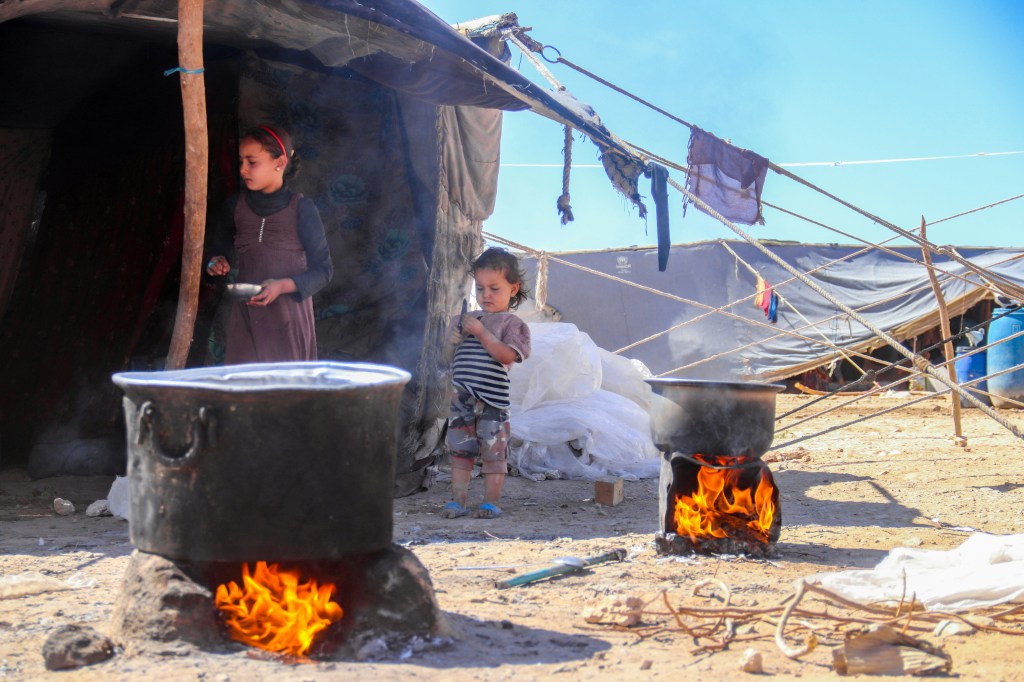
Syrian refugee camp, July 2024. Photo Credit: Salah Darwish
I say anyone’s guess because the United States has refused to take serious global leadership, aside from COVID-19 for a minute, of any of the most pressing international concerns for some decades now: war, genocide, and ethnic cleansing, displaced persons and refugees, climate change, arms sales, potable water, increasing inequality, poverty, vaccinations (particularly measles and cholera), or diseases (like malaria, TB, and HIV/AIDS).
And despite how much charitable giving Americans do, and they are a generous lot, “America First” or “Make America Great Again” might marginally increase the US standard of living (and I say marginally because Mr. Trump clearly does not understand how tariffs work and the millions of Americans who voted for him clearly don’t care) but it will likely do little for the hundreds of millions of people around the globe who will wake up this morning in harm’s way and in need of US aid, and leadership. The new US administration likely won’t be moved by those voices.
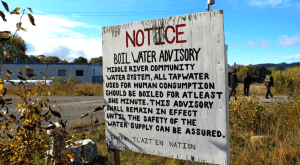
Drinking water sign one of hundreds of Canadian Indian reservations without potable water. Picture is from 2019; issue is unchanged in 2024. In 2024! Photo credit: Joseph Quesnel.
So, you have to be. You are going to have to work—on the ground if you can (I can’t, so as always I am immensely thankful for those of you who do), in e-mail campaigns, in targeted donating, and in harassing leaders, politicians, NGOs, and foreign governments, however you can, to keep your issues in play.
Estimates are that six times as many people were killed by their own state (democide) in the 20th century than died in wars. This estimate doesn’t include those who died from neglect: those living without shelter, those drinking poisonous water, those beaten daily, those whose broken hearts couldn’t let them see it all for one more moment—in our own countries and beyond our borders.
You are needed if the 21st century is to be different.
I know that the untold millions of people in harm’s way around the world this morning—young and old in Bolivia to back Evo Morales’ challenge to Luis Arce, Uyghurs in Urumchi seeking justice for China committing crimes against humanity, those on behalf of the Palestinians people who don’t know how much further they have to descend into hell before Israel is stopped, Ukrainians running from Russia’s bombs falling on shopping centres—are all equally deserving of our attention. And I also agree with those who would say that my list is just the tip of the iceberg, as over 100 armed conflicts are ongoing.
But recent news from Sudan and Haiti must get more of our attention.
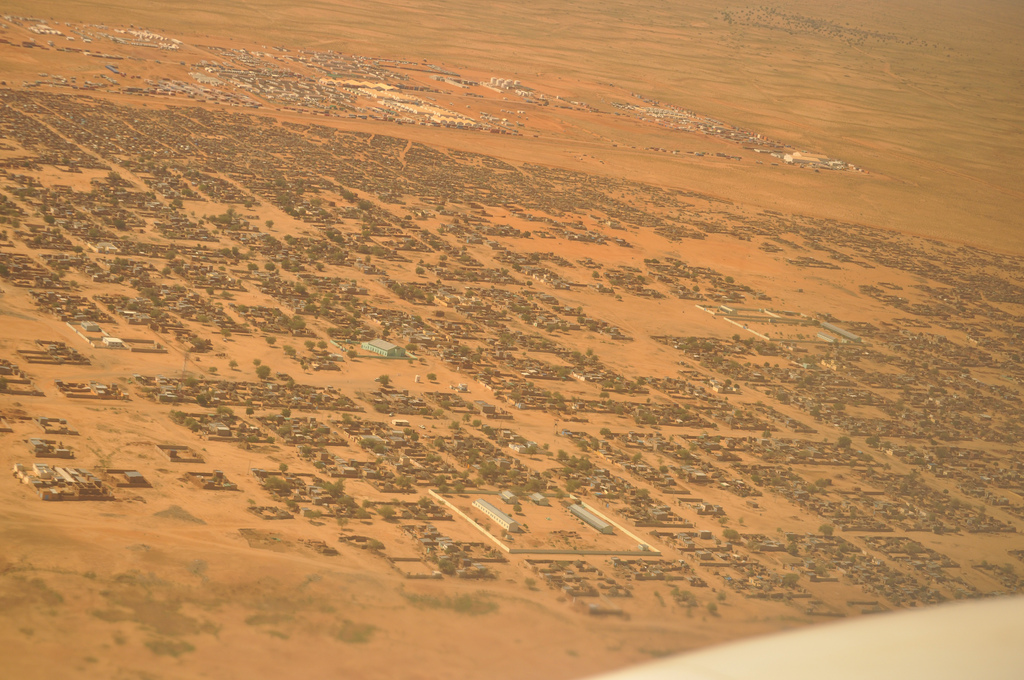
Genocide in SUDAN: By the numbers … 25 million people hungry, 6.6 million displaced within Sudan, more than 1.6 million have fled (recent reports, Ethiopia has accepted more than 60,061 refugees).
In May, Médecins Sans Frontière (MSF) reported that 134 Sudanese were killed at a hospital in El Fashar, Darfur region, as fighting over control between the paramilitary group Rapid Support Services (RSF) and the Sudanese army was ramping up. The fighting is again intensifying. El Fashar is the last city in Dafur under the Sudan army’s control. Thousands of civilians are still caught in the fighting, which includes more attacks on the displacement camps. With all supply routes into the city blocked, in addition to treating victims of the violence, food scarcity is going to be a problem: the people of El Fashar cannot leave the city; they have nowhere to go.
The base of this violence is genocide. We’ve been here before: We did nothing then, we must do something now.
Gang violence in HAITI: By the numbers … over 180,000 children internally displaced—578,074 people displaced overall, 2,490 kidnappings in 2023, 500 killed in just January to March of this year.
Photo by Kelly from Pixel
The current gang violence that has overtaken the capital, Port-au-Prince, is rooted in part to centuries, not decades, but centuries of intervention that has limited Haiti’s attempts to rule its own country, advance economic and social justice, and develop a socioeconomic system that takes care of its citizens. Plenty of blame to go around. But some of the worst of it now is that gangs are continuing to use sexual violence (collective rape, rape, and sexual assault) to intimidate, dominate, and gain or maintain their territorial control. Estimates in the first eight months of 2023: 3,056 women and girls reported their rape.
Genocide and systemic rape in countries with recent histories of political instability situated in the Global South rarely grab our attention. It’s easy to say there they go again and turn away. But currently, in the cases of Haiti and Sudan, most news outlets are covering these ongoing conflicts only when there is a spike in the violence. Meanwhile, people are dying, they’re on the run, and it needs our attention.
This short blog might not change your mind, but do I hope that it can start a conversation about what must be, what can be, what should be done to help the people of Sudan and Haiti in harm’s way.
I listened to a podcast with a US former Supreme Commander of NATO, I think that was his title. Remarkably, he said that the West was afraid that Ukraine would win the war. The complicating factor is a defeated Russia post war: the Russian army is failing but his war of intimidating Western leaders is succeeding. So, the problem might be that Russia will implode if they lose or Putin will be backed into using nuclear weapons. Hmmm.
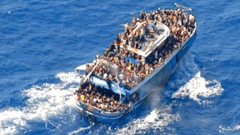
Migrant boat with hundreds of missing migrants—with some estimates at 500 missing and presumed drowned—last week could be the worst ever in the Mediterranean. And that is saying something given all the tragedies and suffering of over the past ten plus years. With smuggling on the rise, and so many refugees on the run, as the survivors from this tragedy attest (survivors were all “boys and men from Egypt, Pakistan, Syria and the Palestinian territories”), what has to be done? One of the many, many issues that deserves our attention is that most of the missing are women and children.
3. Sudan Peace Talks Adjourn
I am finding it more and more difficult to find words to talk about the War in Sudan, as once again the Janjaweed are committing ethnic cleaning in Darfur.
Yet peace talks are paused. Reuters reported that Molly Phee, US Assistant Secretary of State for African Affairs told a House Foreign Affairs Subcommittee said that the US adjourned the talks in Jeddah because: “because the format is not succeeding in the way that we want,” Both sides are still violating agreements and resumed fighting at the end of the last ceasefire.
US policy is to impose sanctions on companies fuelling the conflict. But with charges of genocide, what are we doing? More of this next week.
4. Rwandan Genocidaire Seeking Asylum in South Africa
Fulgence Kayishema was in court in Rwanda accused of ordering the deaths of 2000 Tutsi seeking refuge in a church during the 1994 Rwanda genocide. He was charged in 2001 and has been in hiding in South Africa ever since. Kayishema is seeking asylum in South Africa. Meanwhile, a few weeks ago, Felicien Kubuga, at 88 years of age, was ruled unfit to stand trial at The Hague. He has been accused of financing the genocide and using his radio station, Milles Collines, to foment hate.
I am reading a book by Michela Wrong, Do Not Disturb: The Story of a Political Murder and African Regime Gone Bad (New York: Public Affairs, 2021) that describes the government of Paul Kagame, in power since his political/military movement based in Uganda came to power in Rwanda post genocide; he has been in power ever since. According to Wrong, he has been ordering the deaths of his political rivals among other deeply troubling state sponsored violence aimed at maintaining his and his government’s power.
I am working on writing a longer piece on post genocide governing. Any suggestions on what I should read? Or be thinking about?
When I was growing up (the 1970s), if I knew anything about surveillance, I certainly didn’t apply it to the state. It wasn’t a thing then (and if it was, it likely had to do with the man). I think that I started using the term around 9/11 when the Bush administration, via an empowered National Security Agency (NSA), and started listening in on “domestic” chatter (unimaginable to many who hadn’t read Orwell, I suppose).
When politics became a central word in my vocabulary, the world was still in the middle of the Cold War, with Nixon’s rapprochement with China and détente with the Soviet Union was the news. Another world, you say. Agreed. In some ways.
The news today, accompanied by videos of Israeli police’s disgraceful, disappointing, and despicable actions in entering the Al-Aqsa mosque, got me thinking about how Israel has taken the idea of the surveillance state to heights that would make Americans lose their shit. Well, non-right wing Americans, who these days seem intent on conflating this weird idea of “weaponizing the state” with authoritarianism.
The Israeli government and security forces use facial recognition, towers, walls, checkpoints, incarceration, beatings, bulldozing, and a host of other surveillance technologies (high and low) to try to control the “uncontrollable;” the Palestinians who are now a people split into two literal geographical camps in a country that they, too, have historically occupied and who have a claim to statehood. But Israelis will and are fighting to the death to prevent Palestinians’ right to self-determination. The surveillance state is but one tool.
Surely, when 9/11 happened, the surveillance state wasn’t what we wished for. Maybe after WWII this is the logical result of the mind boggling technological developments for war fighting and to counter terrorist attacks. But the post WWII-twentieth century was quite deceptive: most people who died in conflict died at the hands of their own state were due to low tech genocides (the Rwanda genocide and the Cambodian genocides), ethnic cleansing (Bosnia and Nagorno-Karabakh), or gang violence and structural poverty (Haiti).
But here we are now, a few decades into the 21st century and along with Israel’s surveillance state, we have death by drone (compliments of the Obama administration which brought its use to new heights) and the Russian invasion of Ukraine and Russia’s use of Iranian drones. Technology is now back in the driver’s seat as the preferred method for controlling citizens and people’s movements and for killing political opponents.
I will continue this conversation in upcoming posts. And I’m sure that historians of war, technology, and 9/11 will comment and set me straight if I am missing the mark. But in the meantime, I am going to read Tannenwald’s Nuclear Taboo.
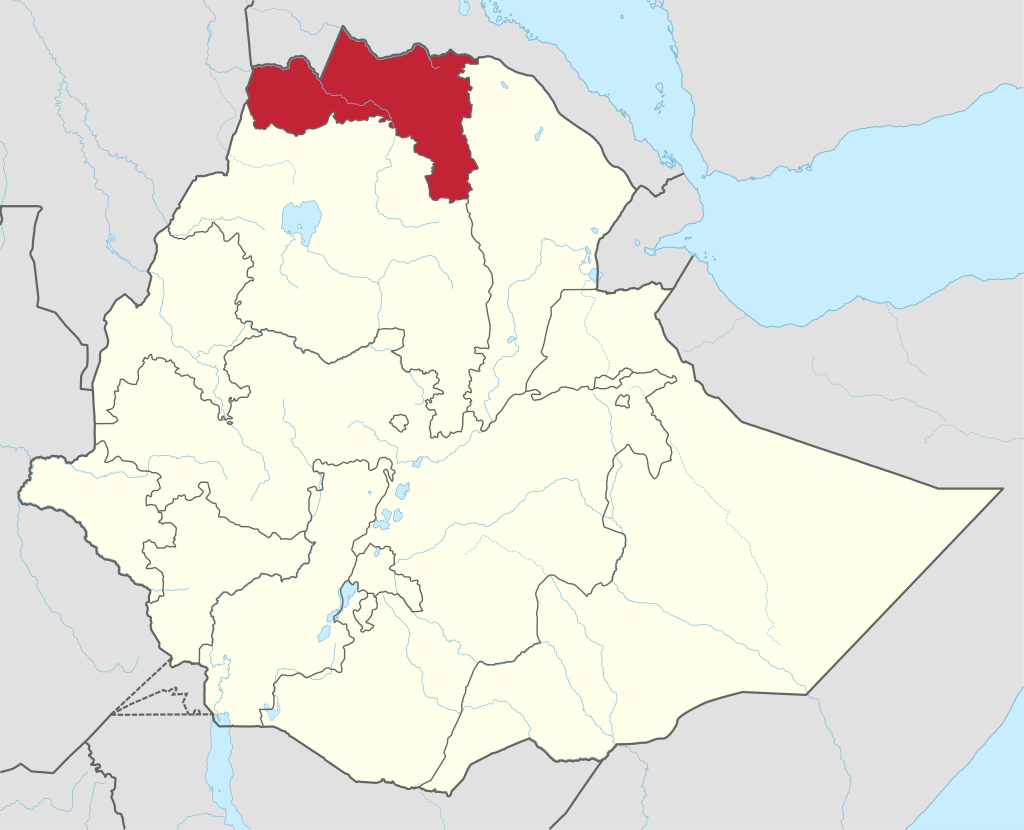
On September 12, 2022, the Tigray forces from the Tigray region of Ethiopia, known as the Tigray People’s Liberation Front (TPLF), agreed to join the African Union’s (AU) peace process. The Ethiopian government, which has been fighting the TPLF since the latest round of hostilities started in November 2020, has long held that only the Ethiopian government can lead peace talks.
For the past 22+ months, the civil war has devastated the Tigray region and spilled over into surrounding regions, especially Afar and Amhara, and involved neighbouring country Eritrea. In March, the two sides agreed to a humanitarian truce and reopen humanitarian aid corridors. Medicine and food and other aid started to flow again along with restoring basic services such as electricity.
Few believe that either side (Tigray forces of Ethiopian government military) can win this conflict. But most agree that should hostilities start up fully again, women will suffer horribly.
In Tigray, when the truce was first announced in February, 13% of children under the age of five were malnourished as were 50% of pregnant or breastfeeding women. Women were also victims of sexual violence when Ethiopian soldiers used rape and other forms of violence as an instrument of war. Women who were raped were unable to access health facilities to receive treatment, emergency birth control, and other more general medical services.
But for other reasons women were and are particularly vulnerable.
As Sharmila Devi pointed out in an article in The Lancet (volume 399, p. 707, February 19, 2022), given the lack of medical supplies, one unintended consequence of the blockade and continuing hostilities, is the risk of maintaining Ethiopia’s low rate of HIV (the lowest in east Africa) because of, for example, expiring HIV kits.
Add to this difficulty in diagnosing and treating HIV in Tigray, and the many thousands of women who were displaced by the fighting, and the picture for women’s health is dire.
We will have to wait and see if the Ethiopian government agrees to peace talks, and if in the end both sides can agree. In the meantime, the G-7, AU member states, and the UN, need to keep the pressure on.
In 2022, we know that a state could kill a group of its own people because they are different. We have many examples in the twentieth century of how a state’s leaders did just that: the Armenia genocide (estimate 1.5 million killed), the Holocaust (as many as 11 million killed), the Cambodia genocide (estimate 2 million killed), and the Rwanda genocide (estimate 1 million).
This blog is the first in a series that will be discussing genocides: the ones that are ongoing, like the Rohingya; the ones we know about, like Cambodia; the ones less known, like gulag in colonial Kenya; and why we just can’t get this figured out and protect innocents from state-sponsored murder.
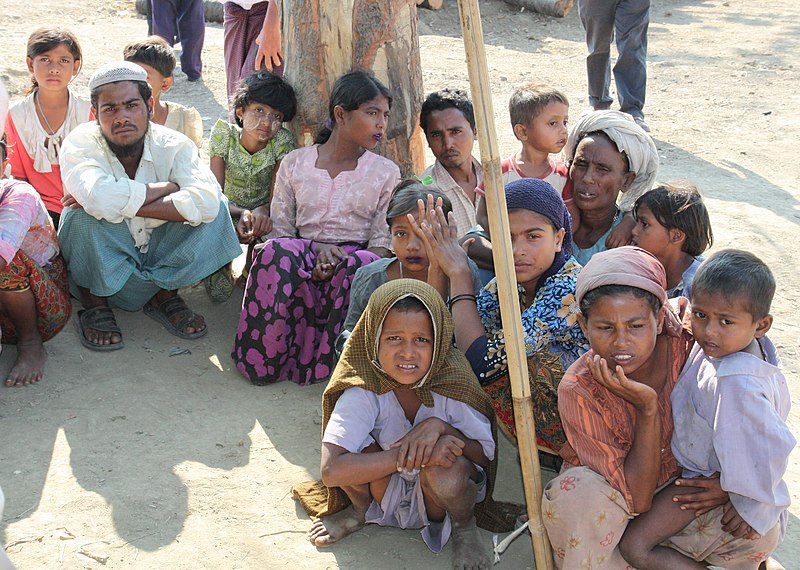
Rohingya People in Rakhine State; Foreign and Commonwealth Office, Source FLickr
Briefly, a word on the Rohingya. The failure to prevent genocide is why the Rohingya, the Muslim minority based largely in the Rakhine state of Myanmar, can be the victims of repeated mass violence at the hands of the Myanmar military. And why the Myanmar military can murder them with little fear of consequences. Mynamar is helped by at least two problems with the international system of states: (1) the Rohingya are stateless; and (2) the international community cannot force the Mynamar state to stop.
The Rohingya are stateless because in 1982, the Myanmar government denied them citizenship. Currently, an estimated 600,000 remain in Myanmar. They are also stateless even more Rohingya are refugees. According to the United Nations High Commission for Refugees, 980,000 Rohingya refugees are living in neighbouring countries, including 890,00 living in Bangladesh in one of the “most densley populated camps in the world.” The Myanmar military killed over 24,000 Rohingya in Rakhine state in 2018—the military started to remove them from their homes in 2017—so they fled to neighbouring countries. They are now among the largest, stateless groups in the world.
This past December, after another Myanmar military attack left 35 people dead in Kayah state, the EU and other states added another round of sanctions (I think this makes round four), including an arms embargo. But none of these actions are based in the Genocide Convention, which under Article I requires that every state that has signed the convention must act to prevent and punish genocide. For Myanmar, sanctions alone may be just like doing nothing.
In later blogs I will look at statelessness, sanctions, and a host of other issues in asking, What can be done?
Here’s the thing. I am finding it harder and harder to care about politics, at any level. I used to eat it up, no matter the issue, the point of view of ideology, or the policy debate. I was in, I had an opinion, and I wanted to know more. I no longer do.
So, over the upcoming months, I’m going to discuss my problem here. I don’t have any idea where I will be going with it, but I invite you to just go with it, with me.
This morning I want to consider the first of many possible reasons for feeling so disconnected: information overload. Let me borrow from Nate Silver’s signal and noise idea because it’s easy for me to think about information overload this way (see his website here https://fivethirtyeight.com/ if you to know more about his take on politics more generally). Silver suggests that I can’t get to the information that I need because I am so bombarded with random or not useful information (what I like to call stupid shit). Perhaps causing some of my frustration with politics.
Fair enough. But the thing is, I have limited my news to such a few sources that I can’t have overload, can I? Every day I glance at maybe three twitter accounts, some of the news wires, or news shows like Rachel Maddow (she covers women’s issues fairly regularly and I like her take on American politics) or CBC morning news (often more likely Radio Canada to work on my French). And usually, I check at least one foreign newspaper that I can still access online without a prescription.
If anything, given the volume of news that I could be reading each day, I shouldn’t be having a problem with information overload. But now that I’m thinking about it, I find most news platforms increasingly irritating because each one is overloaded with really uninteresting, useless content. I don’t know why CBC keeps trying to be all things to all people rather than journalists. I look at their website some mornings and all I can think is who cares?
I don’t think that I suffer from information overload. But I am frustrated with the few sources of information that I have. Moving on then.

 Dr. Wendy's World